


Interpreter Scheduling With Real-Time Visibility
Manage interpreter requests, scheduling, assignments, vendors, and performance through one platform built for language service operations.

Manage Interpreter Scheduling From Start to Finish
Manage scheduled interpretation with real-time visibility into status, availability, fulfillment, and performance.
-
Create Request
Submit interpreter needs by language, location, service type, timing, and expertise.
-
Assign Resource
Match requests to available internal teams or external vendors in one platform.
-
Track Fulfillment
View open, assigned, delayed, and completed jobs in real-time.
-
Monitor Results
Track fulfillment rates, response times, and scheduling performance.
Built for Interpreter Scheduling and Fulfillment
Manage interpreter requests, assignments, vendors, and fulfillment activity in one place.
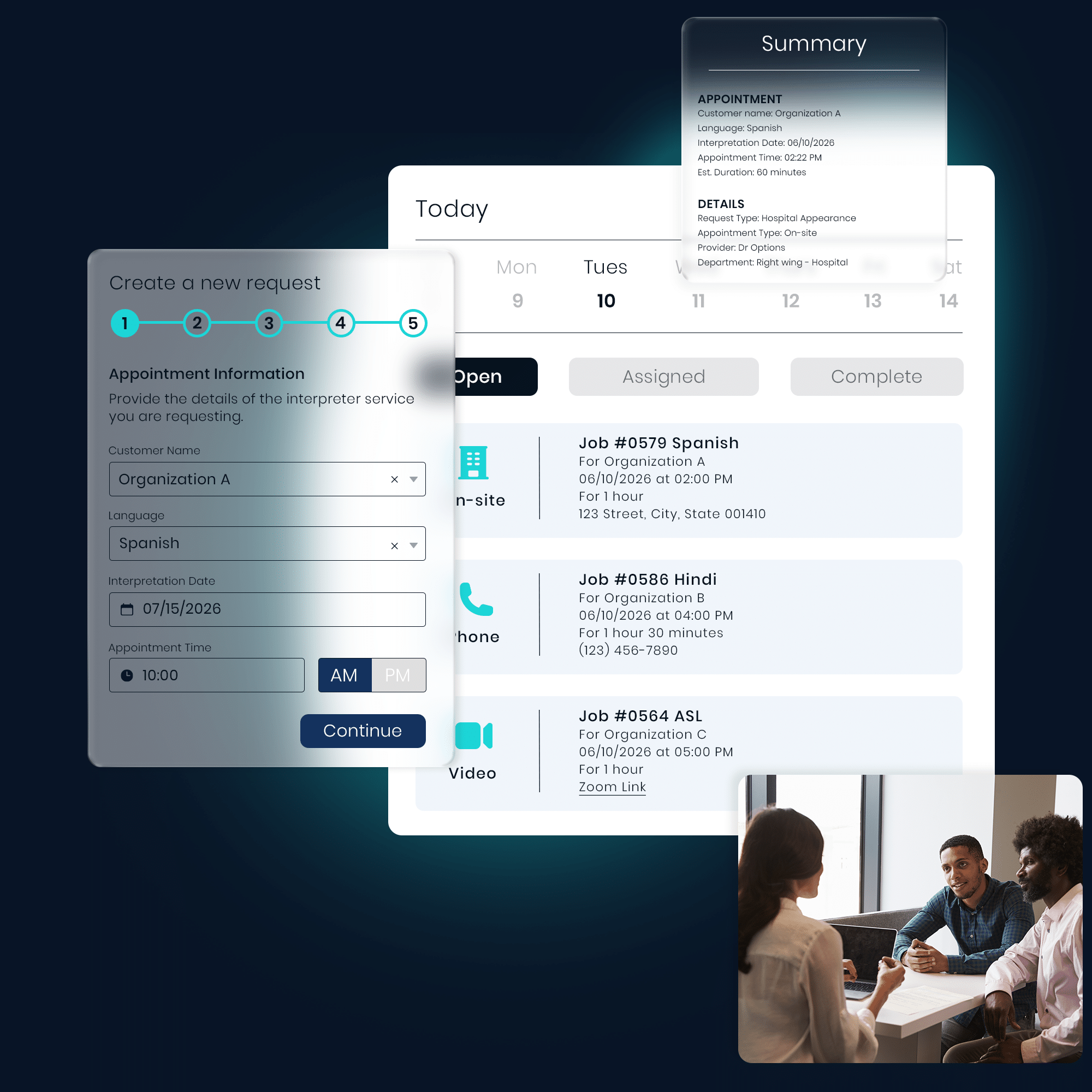
Track interpreter requests from creation through assignment and completion.
Monitor interpreter requests as they move through scheduling, assignment, fulfillment, and completion. Teams can view open, assigned, delayed, canceled, and completed jobs without relying on spreadsheets or other manual reporting methods.
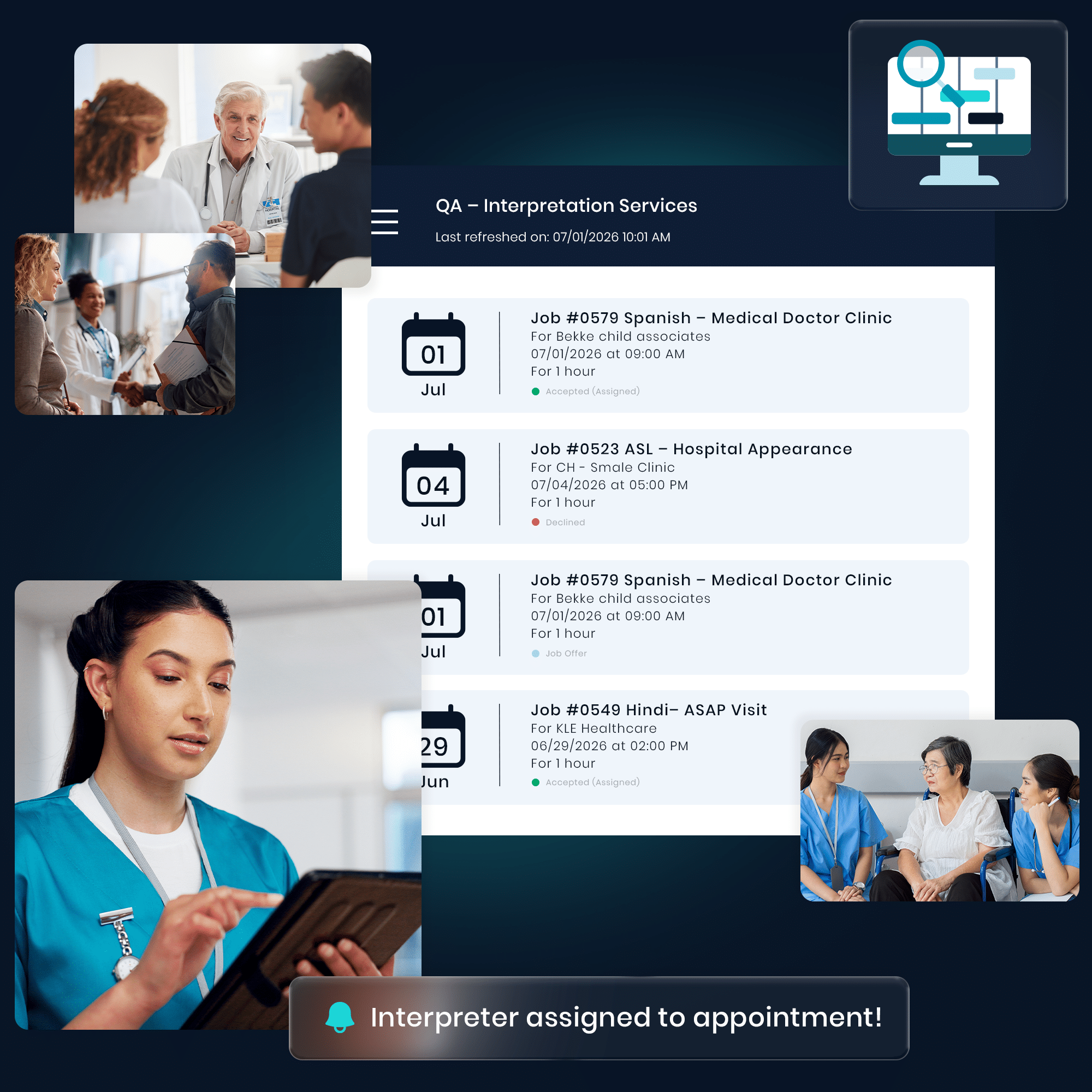
Manage internal interpreters and external vendors from the same platform.
Coordinate interpreter coverage across staff interpreters, contract interpreters, and vendor partners while maintaining visibility into availability, assignments, utilization, and fulfillment activity.
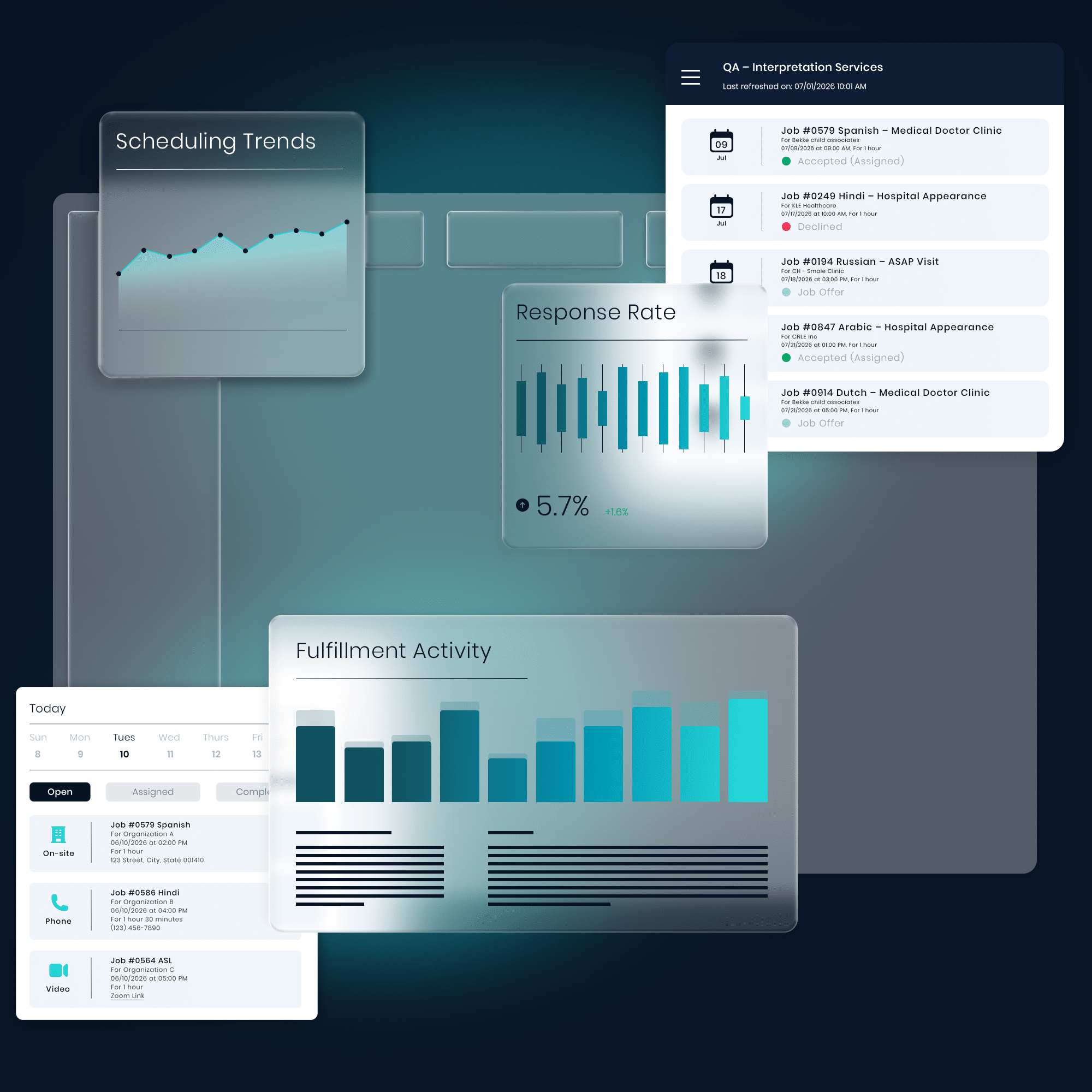
Monitor fulfillment activity and workforce performance in real time.
Review fill rates, response times, assignment activity, vendor performance, request volume, and scheduling trends through operational dashboards and reporting tools.
Stay Ahead of Interpreter Demand
Manage interpreter scheduling with fewer scheduling issues and coverage gaps.
Identify coverage gaps before appointments are affected.
Open requests, assignment activity, and fulfillment status provide early visibility into coverage risks, so gaps can be addressed before appointments are affected.
Reduce the effort required to coordinate interpreter assignments.
Scheduling teams can manage requests, assignments, availability, and fulfillment activity from one system rather than relying on spreadsheets, emails, and manual status updates.
Keep internal teams and vendor partners working from the same information.
Bringing requests, assignments, fulfillment activity, and performance data into one place provides a clearer view of demand, resource allocation, and interpreter utilization.

850M+
Minutes Interpreted Annually
255M+
Words Translated Annually
Connected Language Solutions
Access interpretation, translation, localization, AI, and language operations through a single partnership.
Qualified Linguists at Scale
Connect with specialized language professionals selected for your industry and communication needs.
Technology That Fits Existing Workflows
Embed language support into the systems and processes your teams already use.
Latest Insights


Common Questions. Clear Answers.
Learn how Propio simplifies multilingual communication without sacrificing quality.
Propio Workforce OS™ is used to schedule, manage, and track interpreter services. It gives teams visibility into requests, assignments, fulfillment, vendor performance, and scheduling activity as work happens.
Yes, Propio offers advanced interpreter scheduling for planned appointments and recurring needs. Teams can coordinate in-person, video, and phone interpretation based on language, timing, location, and service requirements.
Workforce OS connects interpreter scheduling with real-time operational data. Instead of only managing a calendar, teams can see open requests, assigned jobs, fill rates, response times, delays, and completion status.
Yes, Workforce OS can manage both internal interpreter resources and external vendor partners. Teams can coordinate assignments, monitor performance, and manage language resources through a single system.
Scheduling visibility helps teams spot open, delayed, or unfilled interpreter requests before they affect service delivery. Administrators can adjust assignments earlier and keep scheduled interpretation services on track.
Workforce OS tracks time-stamped data across the assignment lifecycle. This can include request creation, assignment activity, interpreter response, job status, completion, fill rates, response times, and delays.
Yes, Workforce OS is designed for interpreter scheduling across multiple departments, sites, and service areas, to give a clearer view of demand, coverage, and performance across locations.
Yes, Workforce OS captures detailed scheduling records for reporting, audits, and operational oversight. Teams can use this data to document service activity, monitor fulfillment, and improve accountability.
Ready to Streamline Communication?
Connect your teams with language solutions built for speed, accuracy, and compliance.